



After decades of working around complex CRMs, we built one that is intuitive and works.
PragmaCRM comes from a collective of growth people who have run sales teams and pipelines inside businesses that have sold over 200 million dollars in deals between them. We have been the rep entering the data, the manager chasing the forecast, and the person explaining to a board why the pipeline said one thing and the quarter said another.
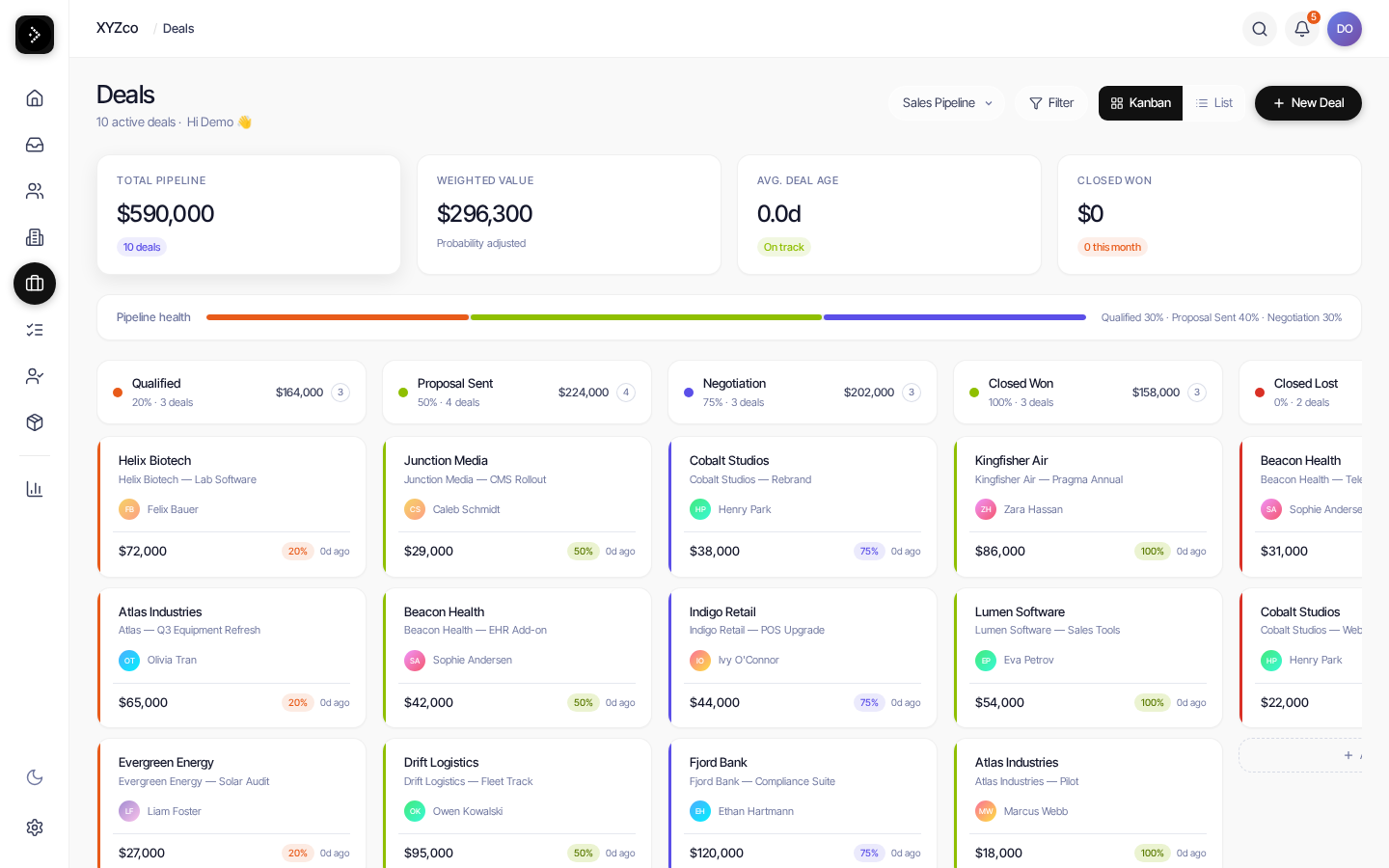

We built PragmaCRM around the process we already knew worked, then removed everything that got in its way.
Every CRM we used had the same problem. It asked reps to maintain a record instead of helping them sell, so the record was never quite true. Forecasts were assembled from optimism. Renewals were remembered rather than managed. Deal values were numbers someone typed in from memory.
To take sales back to a pragmatic process that delivers results.
Sales was a process long before it was software. Qualify honestly, know what you are selling and what it is worth, take the next action, do not lose the account you already won. What broke it was tooling that asked reps to feed the system before the system gave anything back.
PragmaCRM reduces that friction for reps from all walks of life, whether they have run a desk for fifteen years or picked up their first pipeline last month. The process is the same either way, and the software should make following it easier than working around it.
So easy for us to use!

Ken Beinte
Sales Rep
Focus on sales, not software.
Simplified Process

Five principles that decide what we build.
With more than ten years of hands-on experience, we’ve built a strong foundation of knowledge, skill, and trust in our industry. Over the years, we’ve navigated evolving trends, embraced new technologies, and
The rep experience is the strategy
Every feature is judged on whether it makes a rep's day easier or harder. If it adds a step without returning something, it does not ship. Adoption is not a training problem to be solved after launch, it is a design constraint from the start.
Every number must be traceable
A figure on a board should be explainable back to something real. Deal values are assembled from catalogue line items, forecasts are weighted by stage probability, and every change is logged with who made it. We would rather show a smaller number that is true than a larger one that is hopeful.
Less product, built deliberately
Most CRMs grow by addition, and every added feature is a decision passed on to the customer. We say no to a great deal, because a tool that does eight things well beats one that does forty things adequately behind three pricing tiers.
Sales does not end at closed
Most of the value in a B2B account arrives after the first sale. Renewals and upsells deserve the same deliberate pipeline that new business gets, not a calendar reminder somebody sets for themselves and then moves twice.
Simple pricing
One plan, one price, no seat minimum, nothing held back for an enterprise tier you have to ask about. The same principle applies to how we describe the product. If a claim needs a footnote, it is not a claim worth making.
Seven industries. One process that held up in all of them.
Between us we have built and run pipelines across B2B technology, agencies and consultancies, B2B medical, hospitality, health and wellness, financial services and capital raising. Different cycles, different buyers, different average deal sizes.
What did not change was the shape of the work. Qualify honestly. Know what you are actually selling and what it is worth. Take one clear next action. Do not lose an account you already won because nobody was watching the renewal date. PragmaCRM is that process, made into software.
in deals managed by the team behind PragmaCRM
industries worked across
plan, with everything included

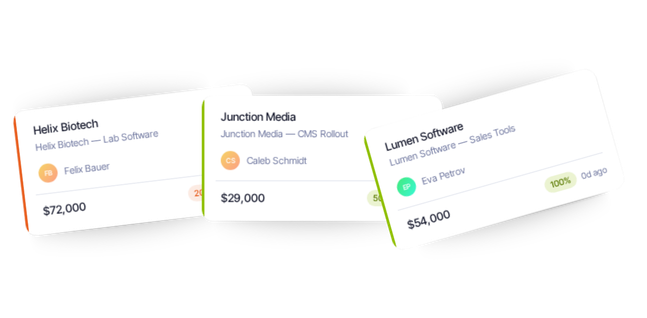
Why teams choose PragmaCRM
We are not a generalist software company that surveyed some sales teams. We were the sales teams. That shows up in the details: what gets asked for at the point of entry, what gets left out, and what the system does automatically so nobody has to remember it.
- Deal values built from your real products and services
- One next action on every lead and every deal
- Renewals and upsells managed, not remembered
- A history that writes itself as you work
- Forecasting you can put in front of a board
- One plan, no seat minimum, everything included